
Most families arrive at their first pectus appointment with the same three questions. Is the dent getting worse? Is it pressing on the heart? Will my child need an operation? A good consultation answers all three, and it does so with measurements rather than guesswork.
Pectus excavatum diagnosis starts with a conversation and an examination, and it often ends with a scan and a few simple heart and lung tests. This guide walks you through each step, explains what the numbers mean, and covers what to bring along. Much of it applies to pectus carinatum (pigeon chest) too, and we point out where the two differ.

Who should book a pectus assessment?
You do not need to wait for symptoms. It is worth booking a check if you notice any of the following:
- A dip or bulge in the chest that is becoming more obvious, often during a growth spurt in the early teens
- Getting out of breath or tiring sooner than friends during sport
- Chest pain, or a racing or pounding heart, during exercise
- A teenager who avoids swimming, changing rooms or taking a shirt off
- An adult who has lived with the shape for years and now wants to know the options (see our guide on pectus excavatum in adults)
Step 1: Your history and a physical examination
Surgeons diagnose pectus excavatum through a careful health history and physical examination. The surgeon will want to know when the shape first appeared, whether it has changed, and what symptoms come with it. Expect questions about exercise, breathing, chest pain and palpitations, and about family members with a similar chest.
The examination itself is quick and painless. The surgeon looks at the chest from the front and side, standing and lying down, and checks how deep the dip is and whether one side sits lower than the other. The surgeon also checks posture and the spine, because a curved spine sometimes appears alongside chest wall shapes. Long arms, very flexible joints or a tall, slim build can prompt questions about connective tissue conditions such as Marfan syndrome, which some patients with pectus also have.
Many surgeons take photographs at this visit. They make it much easier to see later whether the chest is changing as your child grows.
How the examination differs for pigeon chest
With pectus carinatum the key question is flexibility. The surgeon presses gently on the bulge to feel how easily it flattens. Some clinics measure this with a pressure device that reads the force needed to correct the chest, known as the pressure of initial correction. A chest that flattens easily usually responds well to a pectus carinatum brace, so many children with pigeon chest never need a scan at all.
Step 2: Measuring how deep the chest really is
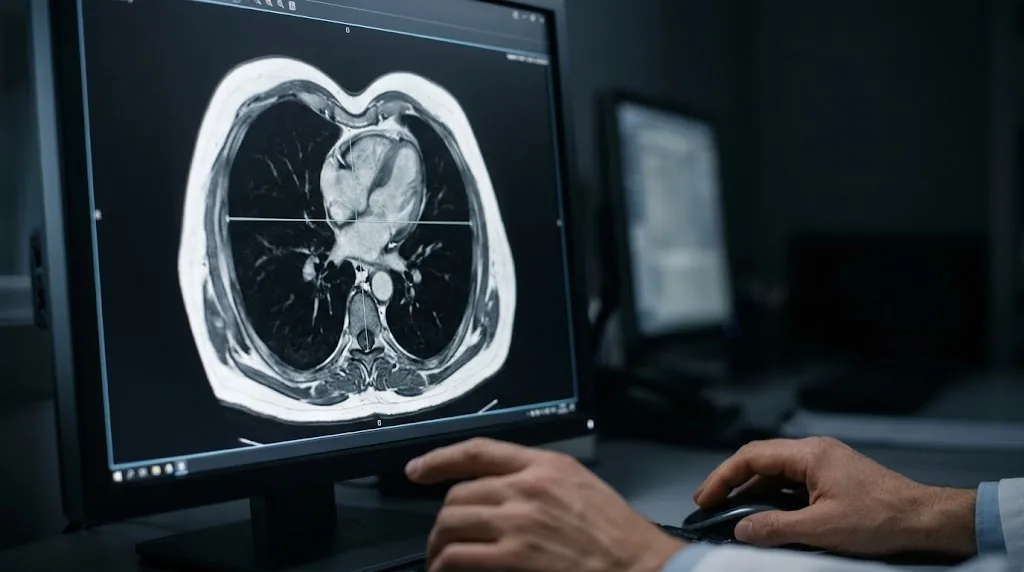
A dip that looks dramatic in the mirror can be mild on a scan, and the reverse is also true. That is why surgeons rely on two standard measurements taken from a cross-sectional image of the chest.
The Haller index
The Haller index divides the width of the chest by the shortest distance between the breastbone and the spine. The deeper the dip, the higher the number. An average chest sits at about 2 to 2.5. A Haller index above 3.25 is the long-standing benchmark for significant pectus excavatum and surgeons widely use it when deciding whether surgery is an option.
The correction index
The correction index shows what percentage of the chest depth the surgeon would need to lift to give a normal shape. It copes better with unusually wide or narrow chests, where the Haller index can mislead. Researchers at UT Southwestern recommended surgery from a correction index of 28% or more, a figure that lines up with the Haller index cut-off of 3.25.
CT or MRI?
A CT scan is quick and shows the chest in fine detail, but it uses radiation, so radiographers prefer low-dose settings for children. MRI uses no radiation at all. A study from Beijing Children’s Hospital compared the two in children with pectus excavatum and found no significant difference in the Haller index between them. Which scan suits you depends on age, what else the surgeon needs to see and what is available near you.
Not everyone needs a scan at the first visit. With a mild, symptom-free dip in a young child, the surgeon often simply keeps watch and measures again as they grow.
Step 3: Checking the heart and lungs
A deep chest can press on the heart and limit how far the lungs expand during exercise. If your symptoms or scan suggest this, the surgeon may arrange:
- An echocardiogram, an ultrasound of the heart that shows whether the breastbone is pressing on it and how well the valves and chambers are working
- An ECG, a quick tracing of the heart rhythm
- Lung function tests, where you blow into a machine that measures how much air you move and how fast
- An exercise test in some cases, because many people only notice symptoms when they push themselves

These tests help show the extent of heart and lung compression, and some funders ask to see them before they approve surgery, so keep copies. Our article on how pectus excavatum can affect the heart explains the link in more detail.
Step 4: A metal allergy check before Nuss surgery
If the plan is the Nuss procedure, a curved metal bar will sit behind the breastbone for a few years. Most bars use surgical steel, which contains nickel and chromium. Tell the surgeon about any rash from jewellery, watch straps or belt buckles. The surgeon may arrange an allergy test, and if it is positive they can use a titanium bar instead.
How the results shape your treatment plan
No single number decides the outcome. The surgeon weighs the measurements alongside your symptoms, the heart and lung findings, your age and how much the shape affects daily life and confidence. As a rough guide:
| What the assessment shows | What it usually points to |
|---|---|
| Mild sunken chest, no symptoms | Monitoring, with a review as the child grows |
| Haller index above 3.25, correction index of 28% or more, or heart and lung effects | A discussion about surgery, usually the Nuss procedure |
| Flexible pigeon chest in a growing child | Bracing |
| Stiff pigeon chest, or bracing not practical | The reverse Nuss procedure or open surgery |
What to bring to your appointment

- Any previous X-rays, scans or reports, including the disc or the online link
- A short list of symptoms and when they happen
- Current medication and known allergies, especially to metals
- Family history of chest wall shapes or connective tissue conditions
- Your medical aid details
- Your questions, written down so you remember them all
- A top that is easy to take off for the examination
Questions worth asking the surgeon
- How severe is the chest, and what are the measurements?
- Is it affecting the heart or lungs?
- Is it likely to change as my child grows?
- What are all the options, including doing nothing for now?
- If surgery is advised, what does recovery look like? (Our week-by-week Nuss recovery guide is a good place to start.)
- When should we come back for a review?
Booking a pectus consultation in South Africa
Dr Ivan Schewitz, a cardiothoracic surgeon who treats the full range of chest wall conditions, sees patients at Waterfall City Hospital in Midrand, Chris Barnard Memorial Hospital in Cape Town and Umhlanga Hospital in Durban. Online consultations are also available, which helps families who live far from these cities. If you already have scans or reports, send them ahead so the surgeon can review them before you meet.
Book a consultation or read more about pectus excavatum and pectus carinatum.
Frequently asked questions
Can pectus excavatum be diagnosed without a scan?
Yes. The surgeon makes the diagnosis by examining the chest. A scan measures how severe it is and is mainly needed when treatment, especially surgery, is being considered.
Does a high Haller index mean my child needs surgery?
Not on its own. It shows the chest is deep, but the decision also takes in symptoms, heart and lung results, age and how your child feels about their chest. Some families choose to wait and review.
At what age should a child be assessed?
Whenever you first notice the shape. Many chests change quickly during the early teenage growth spurt, so an early baseline makes it much easier to see whether things are getting worse.
Is the assessment painful?
No. The examination, scans and heart and lung tests are all non-invasive. The only discomfort most people report is lying still in the scanner.
Will my medical aid cover the consultation and tests?
That depends on your scheme and plan. Ask the rooms for the relevant codes and a quote, then check with your scheme before the tests are booked.
This article gives general information, and it does not replace a proper medical assessment. Every chest differs, so treatment decisions follow examination and, where needed, imaging and further tests.