Most parents spot it at the pool. Their son pulls off his shirt, and the breastbone sticks out in a way it never did a year ago. Friends call it a pigeon chest. Doctors call it pectus carinatum.
Here is the good news. Most children with this shape never need an operation. A custom pectus carinatum brace, worn properly while the chest is still growing, can reshape the chest without a single incision.

With summer and swimming season close, this is when many South African families start asking about it. So this guide covers how bracing works, who it suits, and what results look like in real life.
What is a pectus carinatum brace?
A pectus carinatum brace is a lightweight frame that wraps around the chest. A padded plate sits on the most prominent part of the breastbone, and a second pad sits on the back. Straps then pull the two together and press the bulge inwards.
It works much like braces on teeth. Steady, gentle pressure over months lets the flexible cartilage remodel into a flatter position. Each brace is custom made for the patient’s chest, and it fits under a school shirt without drawing attention.
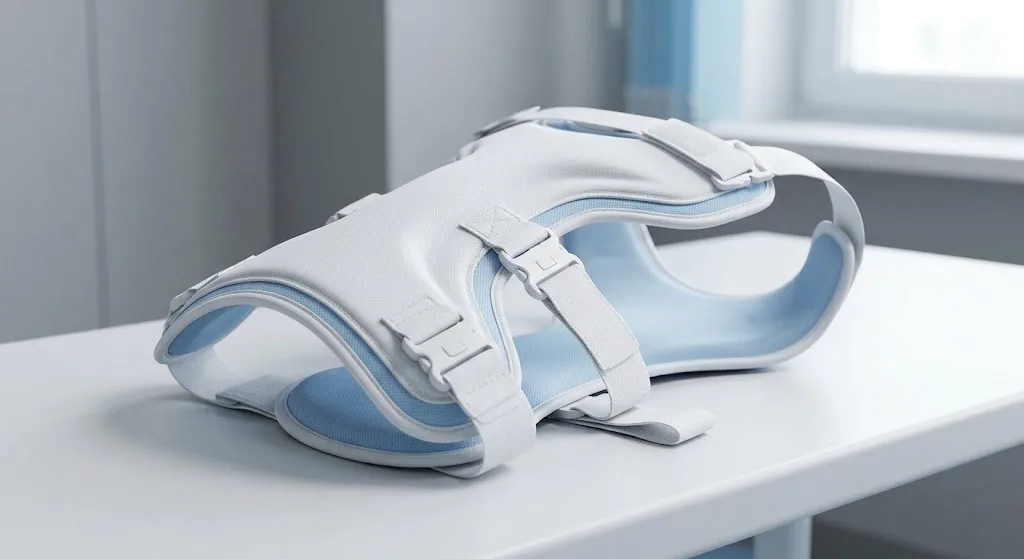
At Pectus Clinic, external bracing is the first line of treatment for most growing children with pectus carinatum.
Why bracing works best during the growth years
Pectus carinatum is seldom obvious at birth. It usually appears in the teenage years, when growth speeds up. It affects roughly 1 in 1,000 teenagers, and boys outnumber girls by nearly four to one (StatPearls).
Timing matters because young cartilage still bends. Bracing works best before or during the growth spurt, and it becomes less effective after about age 19. A Scottish health technology review puts the ideal starting age between 10 and 15 (Scottish Health Technologies Group).
So if you notice a bulge in a child of 11, 12 or 13, an early assessment gives the brace its best chance. Waiting for it to settle on its own usually wastes the most useful window.
Who is a good candidate for bracing?
Most growing children with pectus carinatum suit bracing. During the assessment, the key test is simple. When firm pressure goes onto the bulge, does the chest flatten?
- Still growing. Most patients start between 10 and 16.
- A flexible chest. The breastbone moves back under hand pressure. Some centres measure the force needed, and lower numbers predict a quicker result.
- Symmetrical or one-sided bulges. Both respond, although even, central bulges tend to flatten more completely.
- A motivated child. The brace only works while it is on, so the young person needs to want this too.
Bracing suits fewer people when the chest is stiff, when growth has finished, or when a carinatum bulge sits next to a sunken area. In those cases the reverse Nuss procedure or the Ravitch procedure may be the better route.
How bracing works, step by step
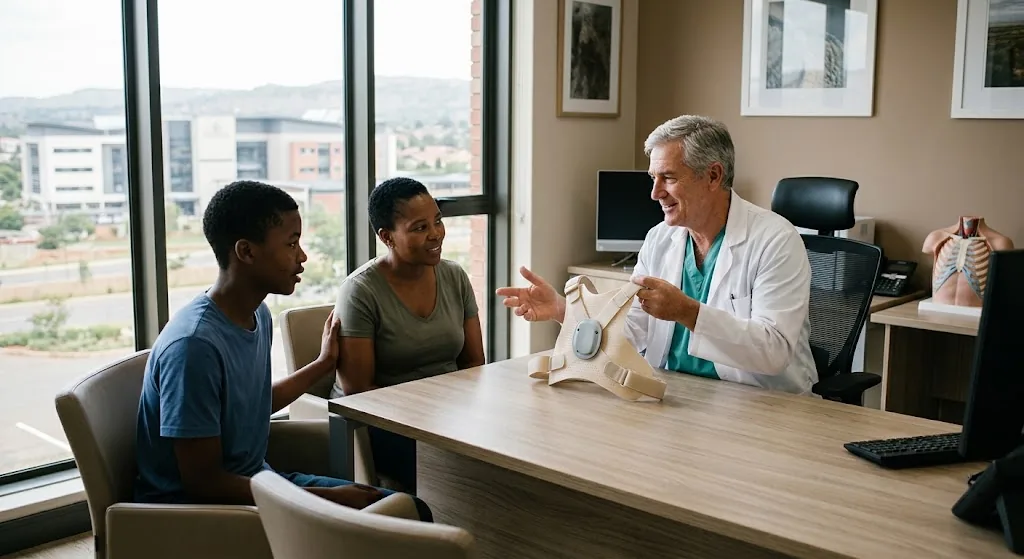
- Assessment. Dr Schewitz examines the chest, checks how flexible it is, and takes photographs and measurements as a starting point.
- Fitting. The brace is made to fit your child’s chest, then fitted and adjusted at the rooms.
- Correction phase. The brace is usually worn around 20 hours a day. It comes off for showering, sport and swimming. At regular reviews, Dr Schewitz adjusts the brace and tightens it as the chest corrects.
- Holding phase. Once the chest is flat, wear time often reduces. The aim now is to hold the correction until growth slows, so the bulge does not creep back.
Most children wear the brace for somewhere between six months and a year. Severe or stiff chests can take longer. Either way, progress is gradual, but many families notice a change within the first few months.
Bracing vs surgery at a glance
| Factor | Brace | Surgery (reverse Nuss or Ravitch) |
|---|---|---|
| Best suited to | Growing children with a flexible chest | Stiff chests, finished growth, or failed bracing |
| Anaesthetic | None | General anaesthetic |
| Hospital stay | None | Yes, a few days |
| Scars | None | Small side cuts (reverse Nuss) or a front incision (Ravitch) |
| Daily commitment | Wearing the brace most of the day | Recovery period, then later bar removal |
| Main side effects | Skin redness, mild discomfort | Surgical risks and post-operative pain |
What results can you expect?
The research is encouraging. A Canadian study compared a lighter wear routine with a more intensive one. Success rates came out almost the same, at 85.3% and 83.5%, and the lighter routine had better compliance (Journal of Pediatric Surgery, 2017).
A 2024 Italian study followed 140 children with a custom brace. Every child improved, and about a third ended with a completely flat chest (Frontiers in Pediatrics).
Across studies, reported success ranges from 47% to just over 90%. The spread mostly comes down to how long people wore the brace and how long they were followed. Once a chest has corrected, it tends to stay that way. A systematic review of 1,185 patients found recurrence in only 2.6% (Seminars in Pediatric Surgery, 2018).
Wear time decides the outcome
One factor sits above all the others. The brace only corrects the chest while it is on. In one study, 75% of teenagers applied a different pressure from the one prescribed, some too tight and some too loose (Journal of Pediatric Surgery, 2018).
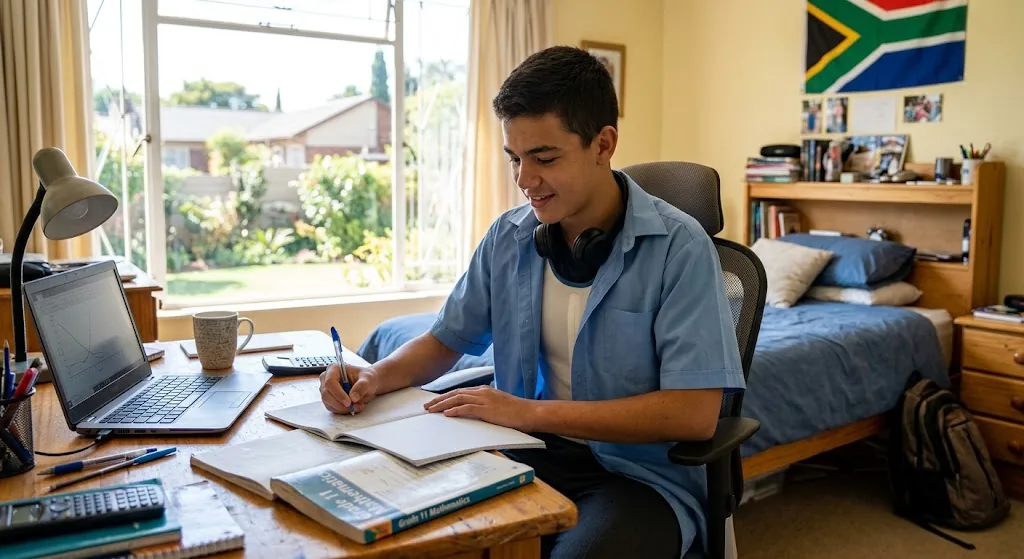
These habits help families stay on track:
- Wear a thin cotton vest under the brace to protect the skin and absorb sweat.
- Build the brace into fixed parts of the day, such as school, homework and sleep.
- Take a progress photo every month. Seeing the change is the best motivator for a teenager.
- Let the school know, so PE teachers understand when the brace comes off.
- Bring the brace to every review, so it can be checked and tightened properly.
Is the brace uncomfortable?
The first week or two takes some getting used to. After that, most children forget they have it on. In the systematic review above, 12% reported mild chest discomfort and around 5% had skin marks, and serious skin problems were rare.
Some redness where the pads press is normal at first. Check the skin daily, keep it clean and dry, and contact the rooms if the skin breaks. In hot South African summers, a fresh cotton layer and a quick wash during the day make a big difference.
Getting a pectus carinatum brace in South Africa
Pectus Clinic assesses and braces children at three centres: Waterfall City Hospital in Midrand, Chris Barnard Memorial Hospital in Cape Town, and Umhlanga Hospital in Durban. Online consultations are also available for a first discussion, which helps families who live further away.
Dr Ivan Schewitz has practised cardiothoracic surgery since 1985 and treats the full range of chest wall conditions, from bracing through to minimally invasive surgery. So if bracing turns out not to be enough, the same team can guide the next step.
Book a consultation or read more about external bracing for pectus carinatum.
Frequently asked questions
What is the best age to start bracing?
Between about 10 and 15 is ideal, while the chest is still growing and the cartilage is soft. Older teenagers can still do well, but correction usually takes longer.
Can my child play sport and swim during treatment?
Yes. The brace comes off for sport, swimming and showering, then goes straight back on afterwards.
Will other children notice the brace?
Rarely. It is slim enough to sit under a school shirt or a loose top. Most teenagers find it far less visible than the bulge itself.
Can adults use a pectus carinatum brace?
Sometimes. Young adults with a chest that is still flexible can respond, although progress is slower. Once the chest has stiffened, surgery usually gives a more reliable result.
What happens if the brace does not work?
If the chest stops responding, or bracing is not practical, the reverse Nuss procedure corrects the bulge through two small side incisions without removing cartilage. Open surgery is kept for more complex shapes.
Will my medical aid cover the brace?
Cover depends on your scheme and plan. Ask the rooms for a quote before the brace is made, so you can check with your scheme in advance.
This article gives general information, and it does not replace a proper medical assessment. Every chest differs, so treatment decisions follow examination and, where needed, imaging.