Ingrid Dammann lived with a sunken chest for most of her life. For years, doctors treated it as a cosmetic quirk. Her story was first covered by The Citizen, and it shows how easily pectus excavatum can be missed in adults.
Years of being told nothing was wrong
Ingrid is an occupational therapist from Glencoe, near Dundee in KwaZulu-Natal. Her symptoms kept being put down to something else: an irregular heartbeat, a small hiatal hernia, or acid reflux. Nobody connected them to the dent in her breastbone.
Only at 31, during her first pregnancy, was her chest flagged as a real concern. By then she could not drive to work without pulling over from dizziness and breathlessness, and she spent the last month of that pregnancy on bed rest.
Looking back on years of normal test results, she called it “the loneliest road I’ve ever walked.”
Finding the cause
After the birth, her symptoms did not settle. In 2019 she had a cardiac ablation for an abnormal heart rhythm, but the underlying problem remained. After contacting many specialists, she reached Dr Ivan Schewitz, who confirmed that her sunken chest was pressing on her heart and lungs.
Surgery and recovery
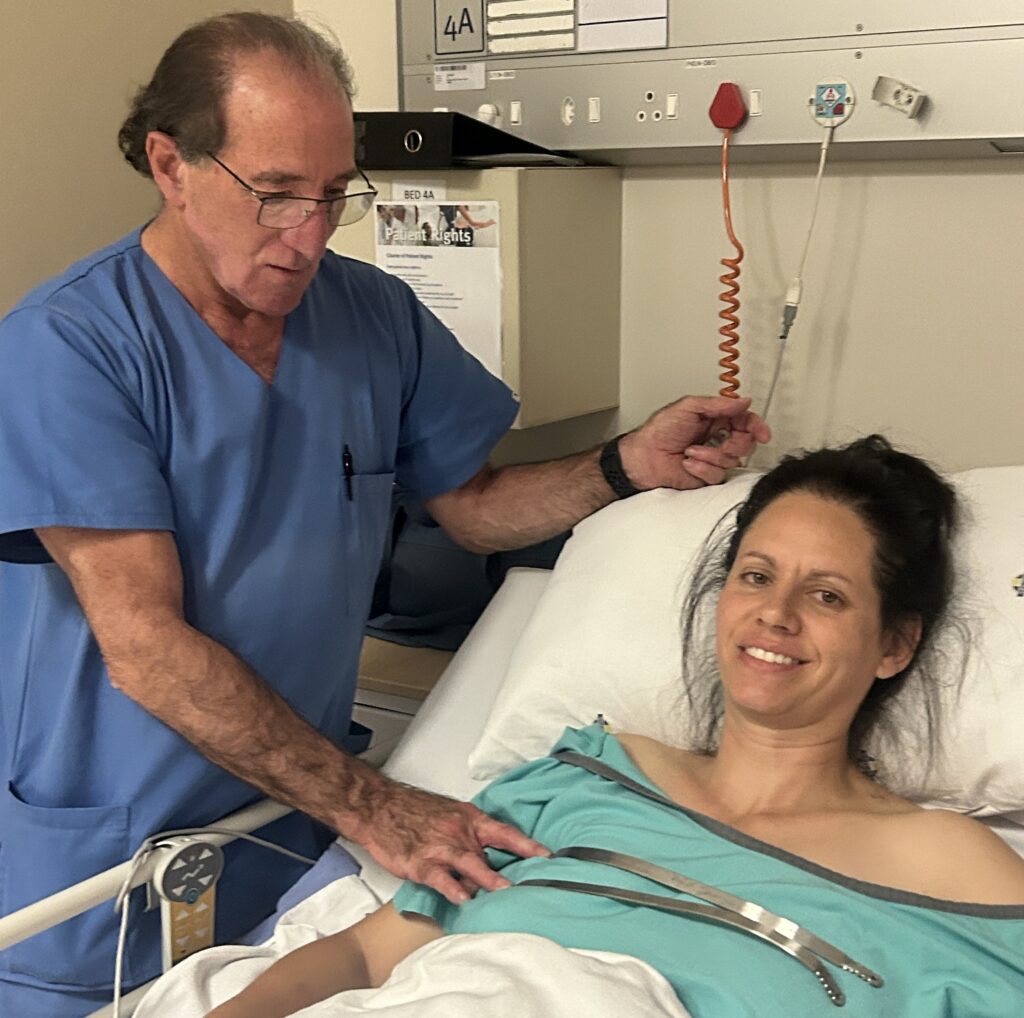
Ingrid had the Nuss procedure. Through two small incisions on the sides of the chest, a curved steel bar is placed behind the breastbone to lift it into position.
Her case was unusual. After she was booked for surgery, she learned she was pregnant with her second child, and she chose to go ahead at 16 weeks. That was a personal decision made with her medical team, and it is not the usual route for patients.
The bars stayed in for just over three years to make sure the correction held, and they have since been removed.
What Ingrid’s story teaches
- Pectus excavatum is not always cosmetic. A deep dent can press on the heart and lungs and limit stamina.
- Breathlessness, palpitations or dizziness on exertion are worth raising, even if earlier tests looked normal.
- Adults can still be treated. Ingrid was in her thirties, and surgery for adults is common.
If this sounds familiar, book a consultation at one of our three centres or online.
Adapted from reporting by The Citizen.